Legacy
Living with the highway
What the expressway left behind, and the plans to fix it.
The cost
After construction, East Tremont declined quickly. Thousands of residents who could afford to leave did, landlords stopped maintaining buildings, and by the 1970s parts of the South and Central Bronx had become national symbols of urban decay. Today, communities along the road live with heavy truck traffic, poor air quality and some of the highest asthma rates in the city.
Capping the trench
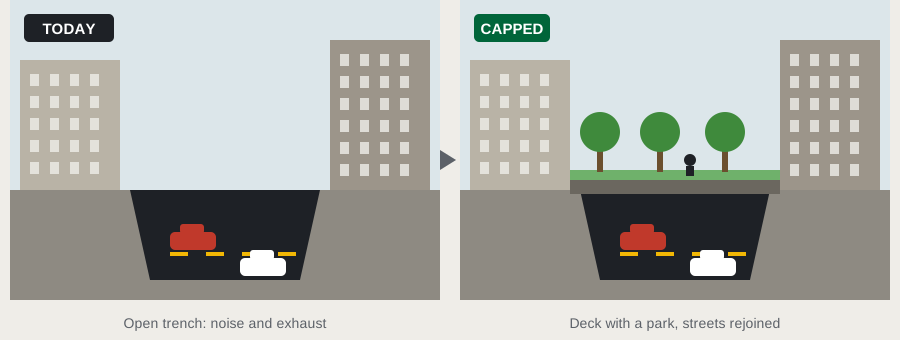
In December 2022, New York City began a study called Reimagine the Cross Bronx, funded by a $2 million federal grant. In 2025, officials found 13 places where building a deck over the highway might be possible, adding parks and rejoining streets that were split apart decades ago. It would cost an enormous amount, and the money has not been secured.
Why it matters
The Cross Bronx is a reminder that infrastructure isn't neutral. Every route is a choice about whose homes are worth protecting. Learning about it changed how I see my own borough, and how I think about who gets a voice when cities decide to build.